Drone window cleaning vs traditional methods: What’s the difference?
Keeping windows clean on multi-storey commercial buildings has traditionally required significant planning, specialised access equipment and substantial labour costs.
Drone window cleaning is changing the way buildings are maintained, offering a safer and more efficient alternative for many properties across Sydney and New South Wales.
Traditional window cleaning methods
Commercial window cleaning at height typically relies on one of three access methods:
- Rope access (abseiling)
- Elevated work platforms (EWPs)
- Building maintenance units (BMUs)
Rope access (abseiling)
This method involves technicians descending from the roof to clean windows. While effective, it requires extensive safety planning, specialised personnel and suitable anchor points.
Elevated work platforms (EWPs)
EWPs use boom lifts or scissor lifts to reach windows from the ground. These systems can be practical for lower buildings but often require traffic management, equipment hire and sufficient site access.
Building maintenance units (BMUs)
BMUs are permanent cradle systems installed on some high-rise buildings. Although effective, they are expensive to maintain and are only available on buildings designed with them.
What drone window cleaning offers
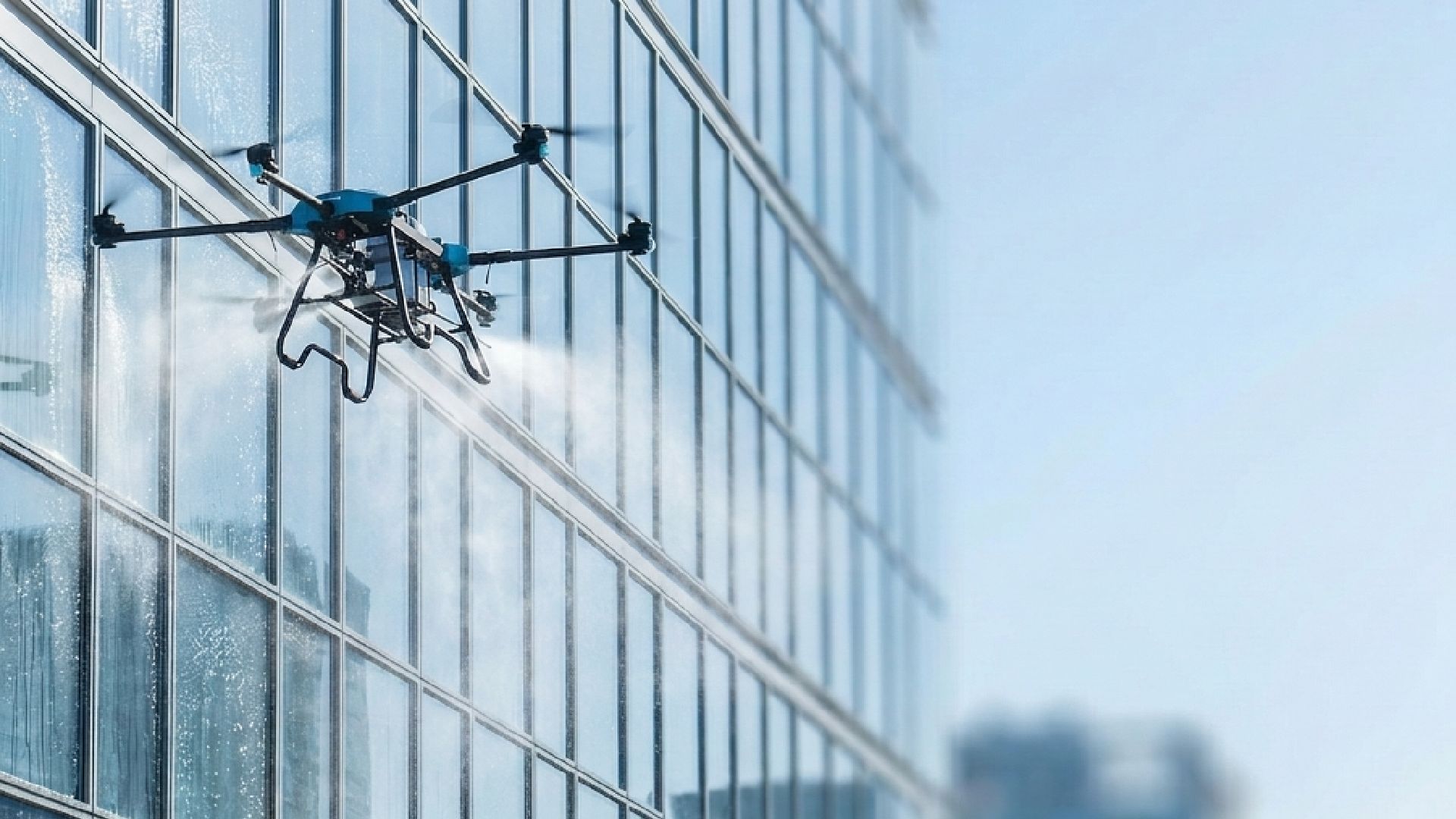
Drone window cleaning removes the need for workers to access the building façade directly. Using specialised cleaning equipment mounted to a commercial drone, operators can clean exterior glazing safely from a controlled distance.
Compared with traditional methods, drone cleaning offers several advantages:
- No rope access, scaffolding or elevated work platforms
- Faster mobilisation with minimal site setup
- Reduced disruption to building occupants and surrounding areas
- Access to difficult-to-reach façades and glazing
- Lower access-related costs on many commercial buildings
- Improved safety by reducing work at height
Is drone cleaning suitable for every building?
Drone window cleaning isn't a blanket replacement for every scenario. For very low-rise or single-storey buildings, traditional methods remain simple and cost-effective. In restricted airspace or for buildings with complex wind environments, a site assessment is needed to confirm drone operability.
However, more commercial property owners are adopting drone cleaning as part of their ongoing maintenance strategy. The ability to improve safety, reduce access requirements and minimise disruption makes it an attractive option for a wide range of commercial and industrial buildings.
At Civil Drones Australia, all our operations are conducted by CASA-licensed operators in compliance with current Australian airspace regulations. If you are looking into drone window cleaning and other related services across New South Wales, connect with our team today.