Industrial solar panel cleaning: Importance, frequency, and advantages
Industrial solar panels are a significant asset, and keeping them clean is one of the simplest ways to protect performance and maximise return on investment. Dirt, dust, bird droppings and environmental contaminants gradually reduce the amount of sunlight reaching the solar cells, impacting energy production and long-term efficiency.
Understanding how often industrial solar panels should be cleaned helps facility managers, asset owners and operations teams maintain reliable system performance year-round.
Why cleaning frequency matters
Solar panels perform best when their surfaces remain clear and unobstructed. Over time, contaminants such as dust, pollution, bird droppings, pollen and organic growth can accumulate across the array, creating partial shading that reduces energy generation.
Even localised soiling can affect the performance of multiple panels within a connected system. For large industrial installations, these losses can quickly translate into reduced energy savings and lower overall system efficiency.
Industry studies have shown that solar panel contamination can reduce energy output by between 5% and 30%, depending on environmental conditions, panel orientation and the length of time between cleans. Regular maintenance helps minimise these losses and supports more consistent performance across the entire installation.
Recommended cleaning frequency for industrial solar panels in Sydney
Industrial solar installations benefit from professional cleaning every six to twelve months. However, the ideal schedule depends on the operating environment and the level of exposure to contaminants.
More frequent cleaning may be required for facilities located:
- Near major roads or industrial zones with high dust levels
- In coastal areas exposed to salt spray
- Close to trees that shed leaves, pollen or organic debris
- In locations with significant bird activity
For businesses that rely heavily on solar generation to offset operating costs, a six-month cleaning schedule is often the most effective approach for maintaining peak system performance and maximising energy production.
What cleaning method is right for your solar installations?
The most suitable cleaning method depends on the scale, location and accessibility of the solar array.
Residential rooftop arrays
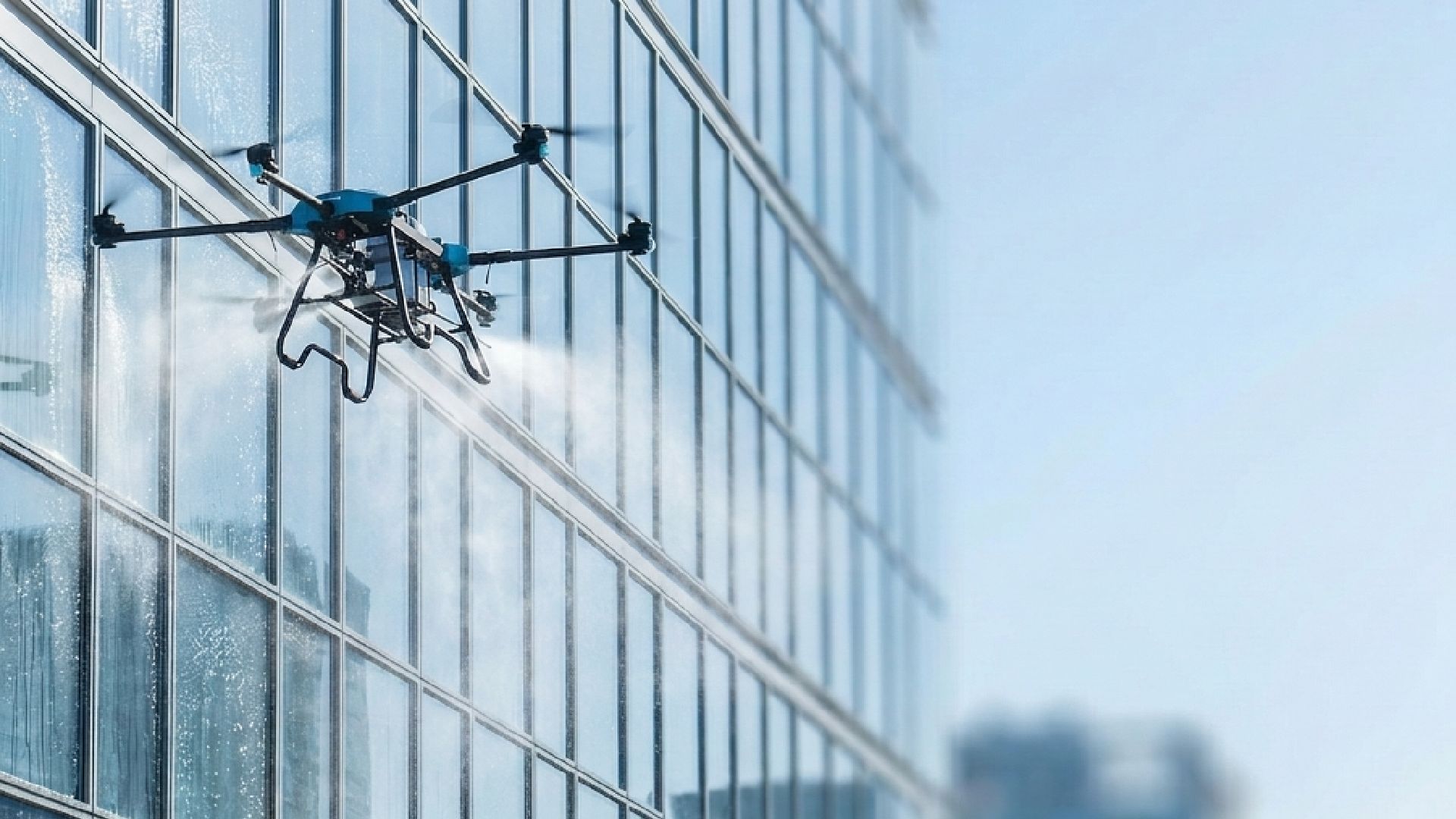
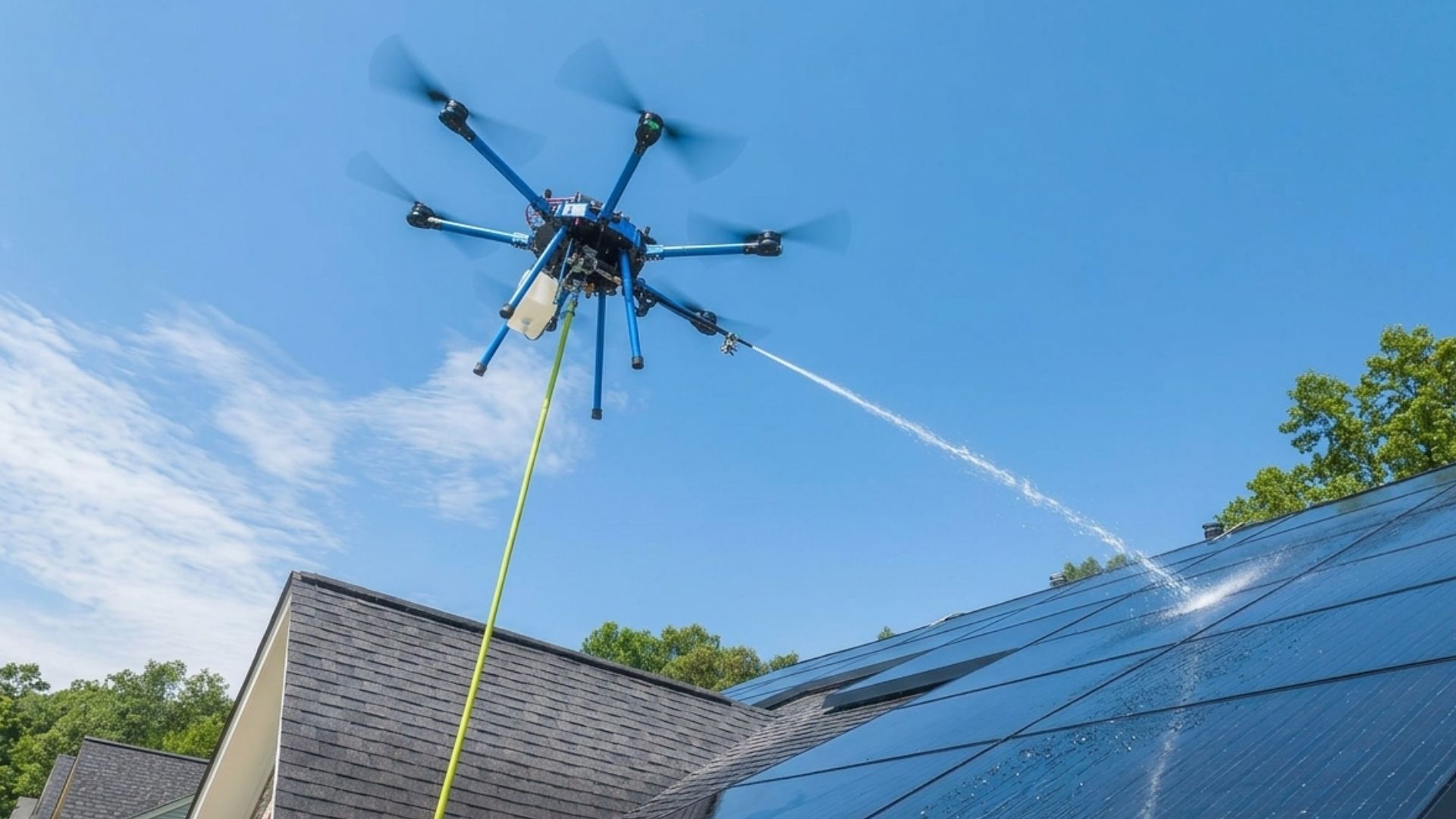
Drone cleaning eliminates the need for personnel to walk across roofs. This reduces safety risks while helping prevent accidental damage to roofing materials and solar infrastructure.
Commercial building installations
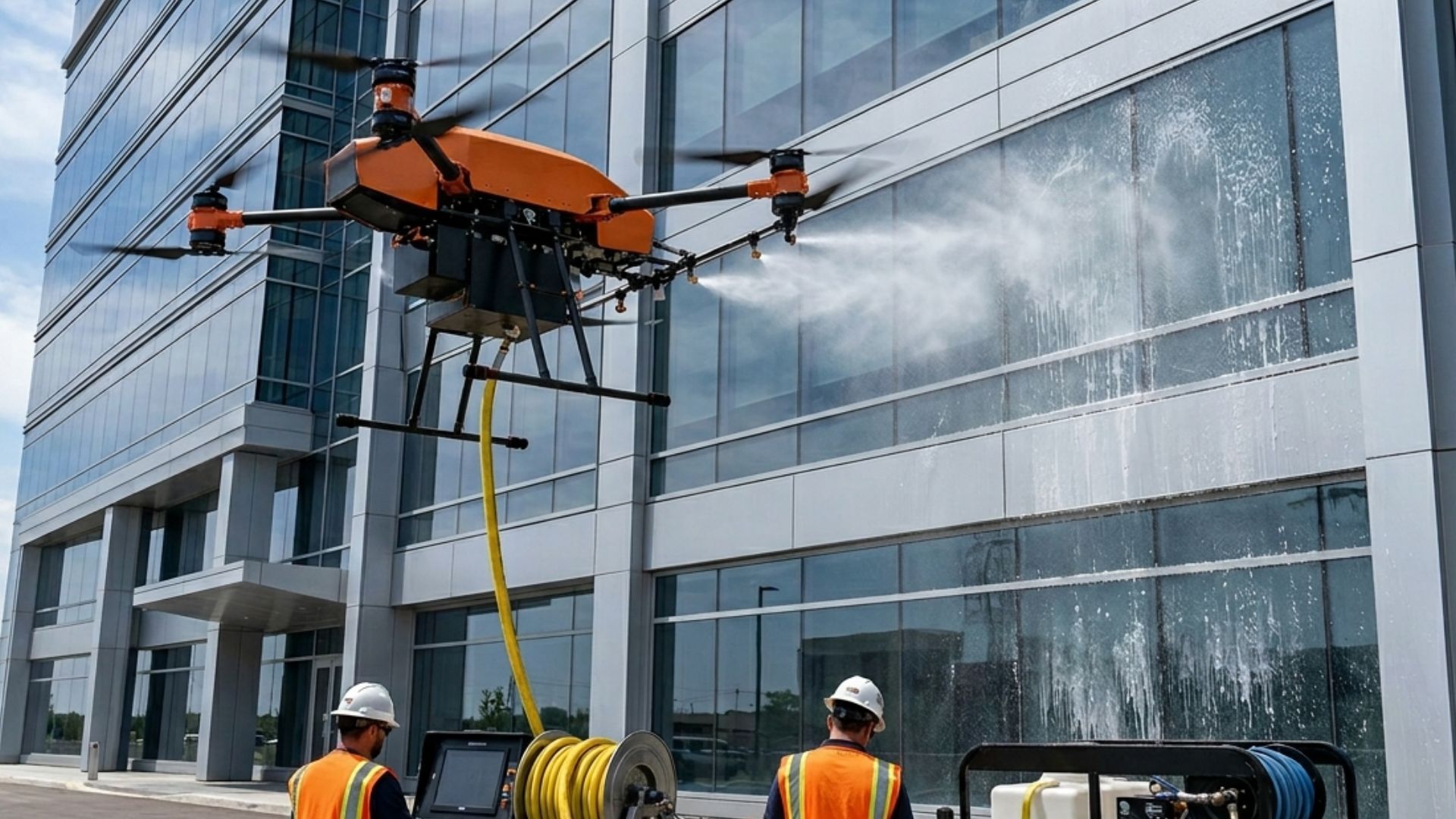
Many commercial and industrial facilities have solar systems installed on high, complex or difficult-to-access rooftops. Drone cleaning allows operators to clean panels efficiently without scaffolding, elevated work platforms or extensive site disruption.
Industrial solar farms
For large-scale solar assets, the technology allows operators to cover large areas efficiently while maintaining uniform cleaning quality across the installation.
Takeaway
Professional drone cleaning uses controlled water pressure and maintains a consistent operating distance from the panel surface, helping remove contamination effectively while protecting sensitive coatings and components. By regularly maintaining clean panels, businesses can improve energy generation, protect asset value and maximise the return on their solar investment.
Civil Drones Australia provides professional solar panel cleaning across New South Wales, using drone technology that accesses every panel safely without roof walkers or scaffolding.
Contact us today to discuss a maintenance schedule for your solar assets.